
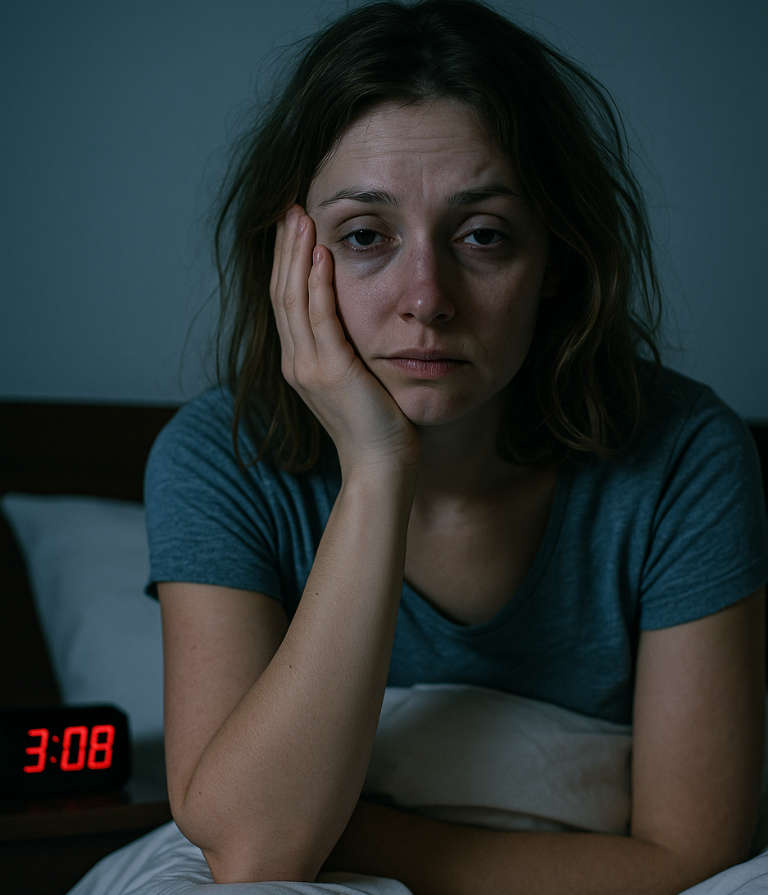
When sleep is bad, everything gets harder. Not in a dramatic way, just… you’re a bit more fragile. You’re running on less patience, less energy, and your brain feels like it’s full of cotton wool.
Insomnia can look like lying there wide awake, waking in the night and not getting back off, or waking too early with that “right, we’re up then” feeling. And after a while, bedtime stops feeling like rest and starts feeling like something you have to brace for.
If you’re searching for hypnotherapy for insomnia, I’m guessing you’ve already tried the usual stuff. Earlier nights. No caffeine. Podcasts. Telling yourself to relax (which never helps, does it). Hypnotherapy for insomnia can be useful when you’re ready to stop battling sleep and start retraining the pattern underneath.

If you’re in Surrey and exploring hypnotherapy for insomnia, you might prefer to start with the treatments page to see what fits best. If you’re still figuring it out, it can also help to skim session fees and what happens. And if you want to get started, you can book a session here.
Insomnia isn’t just one thing
People say “I’ve got insomnia” like it’s one neat label. In real life it comes in different flavours, and you might recognise yourself in more than one.
For some people it’s the can’t-drop-off version. You’re tired, but your mind won’t let go. You start counting hours and doing mental maths. That alone can keep you awake.
For others it’s the waking in the night version. You wake up, check the time (even if you try not to), and suddenly you’re alert. Sometimes it’s anxiety, sometimes it’s stress, sometimes it’s just your system stuck on “on”.
And then there’s the early waking version. Your eyes open at 4 or 5 and your brain starts listing everything you haven’t done yet. You might not feel “anxious” exactly. Just… busy.
Hypnotherapy for insomnia is most helpful when we’re clear on which version (or mix) you’re dealing with, because the pattern underneath can be slightly different even when the outcome, being awake, looks the same.
When sleep becomes a performance
This is the bit people don’t always realise. Insomnia often gets worse because you start trying harder.
You start managing bedtime like a project. No screens, warm drink, the perfect routine… and then you lie down and your brain goes, “Okay. Now sleep. NOW.”
But sleep isn’t something you can force. The more pressure you add, the more your nervous system stays alert. It’s like trying to fall asleep during an exam.
If you’ve got into that loop, it doesn’t mean you’re doing it wrong. It just means your system has learned to associate bed with effort, frustration, and watchfulness. Hypnotherapy for insomnia works well here because we’re reducing pressure first, not adding more rules.
“A lot of people don’t have a ‘sleep problem’ at the start. They have a stress problem, or an overload problem. Then sleep becomes the thing that breaks, and the worry about sleep keeps it going. We work on that pressure first.”
Julie Childs, Clinical Hypnotherapist
What keeps insomnia going
Insomnia usually starts for a reason. A stressful period. A shock. A busy brain. A change in routine. Sometimes it starts with something physical and then the worry takes over.
The tricky part is the brain learns quickly. After a few rough nights, your system starts anticipating being awake. You can feel tired all day, but when it’s time to sleep you suddenly feel oddly switched on.
It’s a bit like a smoke alarm that became oversensitive. The aim isn’t to rip it out. It’s to recalibrate it, so your body stops treating bedtime like a threat. That’s the core of hypnotherapy for insomnia, getting your system out of “on guard” mode at night.
How hypnotherapy for insomnia works
Hypnosis isn’t mind control, and it isn’t sleep. It’s more like guided focus, where your attention narrows and your body can settle. Most people are aware of what’s being said, and can speak if they want to.
With insomnia, we usually focus on calming the background alertness first. Not chasing “perfect sleep”. Not forcing anything. Just helping your system downshift, so sleep can happen more naturally again.
In simple terms, hypnotherapy for insomnia can support you to:
- reduce the body’s threat response at night (that wired feeling)
- soften the thought loops that keep you mentally “on duty”
- rebuild a calmer association with bed and bedtime
Some people feel a shift fairly quickly. Others notice it in small signs first: less dread around bedtime, waking and getting back off a bit easier, feeling less frantic about it. Those changes count. They’re usually the start, and it’s often how hypnotherapy for insomnia shows up at first.

What insomnia might be costing you
This isn’t to scare you, it’s just the honest bit. Poor sleep doesn’t stay neatly in the “night” category.
It can affect your mood, your patience, your concentration, your confidence, and your ability to handle stress. It can make you feel more emotional than you “should” be, and then you start being hard on yourself for that too.
And after a while, it can shrink your life in small ways. You stop making plans. You avoid early starts. You feel like you’re always catching up. For a lot of people, that’s the point they start looking for hypnotherapy for insomnia, not because they want “perfect sleep”, but because they want their life back.
Signs sleep has become a struggle
You don’t need to tick every box. But if you’re wondering whether it’s “bad enough” to get help, these are common signs.
- Bedtime feels tense, like you’re gearing up for a battle
- You feel tired all day, then strangely alert at night
- You wake and your brain immediately starts thinking / planning
- You check the clock (even if you try not to) and it makes you feel worse
- You’re worried about sleep most days, not just at night
- You’re “coping”, but it’s taking a lot out of you
If you read that and thought “yep… that’s me”, you’re not alone. This is a very normal insomnia pattern, and it’s exactly the sort of loop hypnotherapy for insomnia is designed to shift.
What sessions can feel like
We start with your version of insomnia. What happens at night, what time you tend to wake, what your mind does, what you’ve tried, and what makes it worse. You don’t have to tell your whole life story. Just enough to understand the pattern.
Then the hypnotherapy part is calm and guided. Some people worry they won’t be able to “switch off” in hypnosis. Honestly, that’s common, especially if you’re a chronic overthinker. We work with that. You don’t need a special talent. You just need to follow the process. Hypnotherapy for insomnia should feel like a downshift, not a performance.
We might work on things like:
- lowering baseline stress in the body
- softening the fear / frustration around bedtime
- calming the brain’s “monitoring” habit (listening out, checking, scanning)
- sleep confidence, so one bad night doesn’t spiral into a bad week
A quick word on safety and support
Hypnotherapy can be really helpful for sleep, but it’s not a replacement for medical care. If you’re worried about symptoms, severe depression, thoughts of self harm, or anything that feels urgent, it’s important to speak with your GP or appropriate services.
Also, if insomnia is heavily linked to trauma, you may need a trauma informed approach and sometimes a blend of therapies. It’s okay to be picky about what feels right.
How long does it take
This is the question everyone asks, usually in a slightly worried tone.
The honest answer is: it varies. Some people notice changes within a few sessions, especially if sleep became disrupted because of a specific stress period. Others need longer, particularly if insomnia has been around for years and the anxiety about sleep is baked in.
A useful way to think about it is this: we’re not just chasing a good night. We’re retraining a pattern. That can be quick, or it can be gradual, and either way it’s still progress. And that’s usually what hypnotherapy for insomnia looks like, small shifts first, then steadier sleep as the pressure drops.
Things you can try between sessions
Nothing intense here. Just a few small things that tend to support the work.
- If you wake, try not to do “sleep maths”. Notice it, then gently redirect your attention to something neutral (breath, body, a simple image).
- Keep a quick note of patterns: when it’s worse, when it’s better, what helps, what doesn’t. No deep journaling required.
- Practise a short downshift in the day, not just at night. Two minutes of slow breathing, jaw unclenching, shoulders dropping.
- If anxiety is part of it, it can help to read the bigger picture on our anxiety page.
None of this “fixes” insomnia on its own. But it gives your nervous system more chances to learn calm, which is a big part of why hypnotherapy for insomnia can work so well alongside the sessions.
If you want something more structured, the between sessions page explains how to support change in the gaps without turning your life into a self-improvement project.
“You don’t need to become a different person to sleep better. Most of the time, we’re just helping your system stop working overtime, so it can do what it already knows how to do.”
Julie Childs, Clinical Hypnotherapist
FAQs about insomnia hypnotherapy
Hypnotherapy for insomnia uses guided relaxation and focused attention to help calm the nervous system, reduce the “on guard” state at night, and shift the thought loops that keep sleep stuck. It’s not about forcing sleep, it’s about making it easier for sleep to happen again.
No, it’s not sleep. Most people are aware and can remember what’s said. It’s more like a calm, absorbed focus where your body can settle.
Often, yes. A lot of insomnia has an anxiety flavour to it, even if you don’t feel “anxious” in the daytime. We work on calming the threat response first, then we target the patterns that keep pulling you into wakefulness. That’s a common focus in hypnotherapy for insomnia.
It depends. If insomnia is tied to a recent stress period, some people notice a shift within a few sessions. If it’s been going for years, it can take longer because we’re retraining a learned pattern, not doing a quick patch. Either way, hypnotherapy for insomnia is about building steadier change, not chasing one perfect night.
If you want more general answers about sessions and how things work, the full FAQs page is here.
Ready to talk it through
If insomnia is making life foggy, shorter-tempered, or just harder than it needs to be, hypnotherapy for insomnia could be a good next step. You don’t have to wait until you’re falling apart. And you don’t need the perfect explanation either , we can work it out together.
If you’re looking for hypnotherapy for insomnia in Surrey, the next step is simple: book an appointment and we’ll start with a conversation about what’s been happening and what you want instead.
If you’re not sure insomnia is the only issue (often it isn’t), you can also browse the treatments overview and choose the closest starting point.