
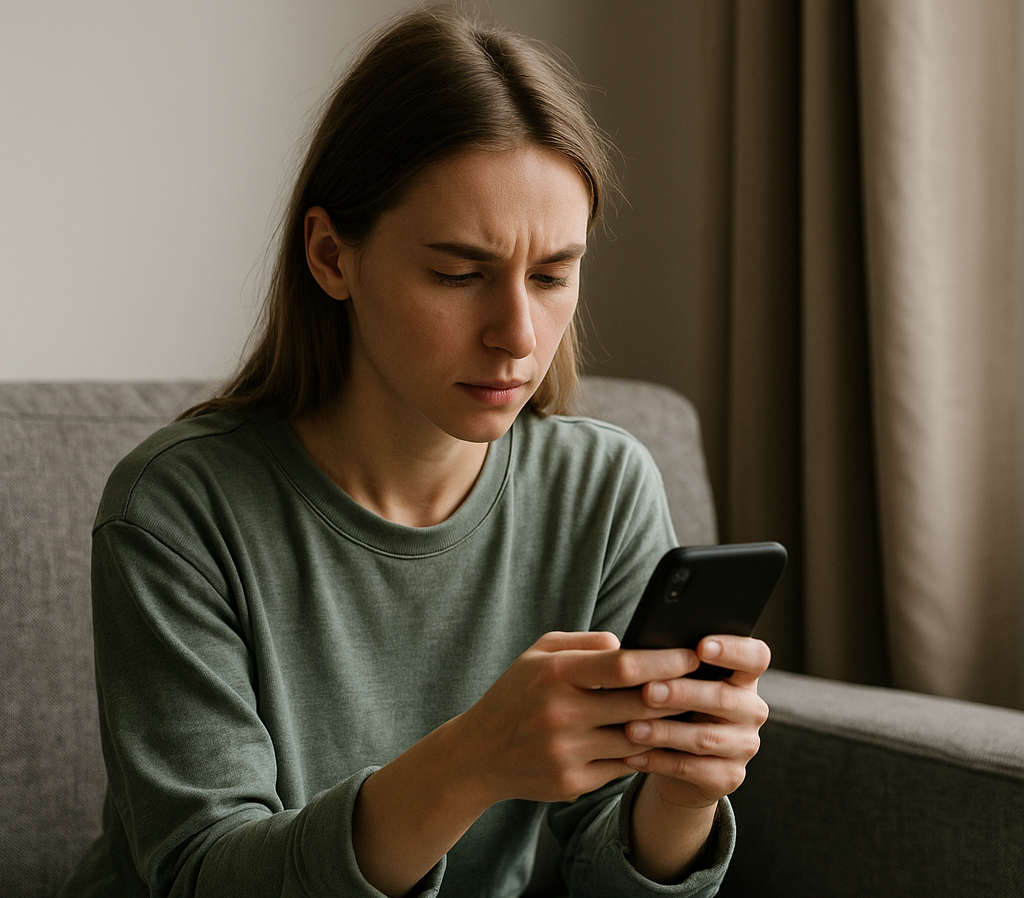
Do you ever pick up your phone for one quick thing, and then suddenly it’s 25 minutes later and you don’t even remember what you meant to check?
This isn’t about lack of willpower. Phones are designed to pull you in. Little hits of novelty, a tiny burst of relief from boredom, a way to avoid an awkward feeling for a moment. If it’s turning into compulsive phone checking, it can start to feel like your attention has a mind of its own.
If you’re here because it’s starting to feel compulsive, like you can’t fully switch off, or you feel twitchy without it nearby, you’re not alone. Smartphone addiction can look harmless from the outside, but inside it can feel like your attention isn’t really yours anymore. Hypnotherapy for phone addiction focuses on that automatic loop, not just the intention to “try harder”.
If you want to browse other starting points first, the treatments page is useful. If you’d like to talk it through properly, you can book here.
When phone use turns into a habit loop
Most people start off thinking, “I’m just checking messages”. But the pattern builds quietly.
It becomes the thing you do when you’re tired, bored, stressed, lonely, overwhelmed, or you just don’t want to feel whatever you’re feeling for a minute. And because it works temporarily, your brain starts suggesting it more often. That’s how digital addiction tends to form, not through one dramatic moment, but through repetition.
Over time you can end up with a weird mix: your phone gives you relief, but it also leaves you more scattered, more restless, and more behind on real rest. If you’re trying to break the phone habit, it helps to work with the impulse itself, not just the guilt afterwards.
Signs it might be phone addiction
You don’t need to tick every box. But if you recognise a few of these, it’s a clue the habit has got a bit too strong.
- You check without deciding to (it’s just… in your hand)
- You feel uneasy, panicky, or irritated when it’s not nearby
- You lose time, then feel annoyed with yourself
- You reach for it when you’re stressed, bored, lonely, or uncomfortable
- You struggle to focus, even on things you want to do
- You check during conversations, meals, TV, bedtime… basically everything
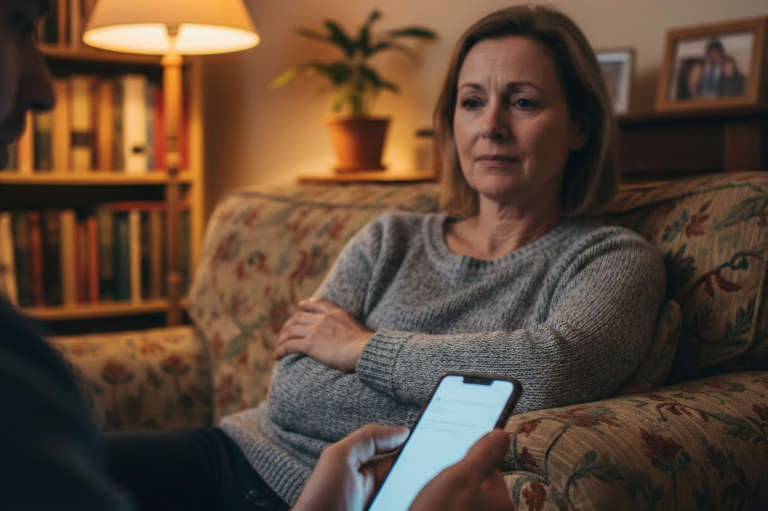
“Most compulsive phone use isn’t about the phone. It’s about what your brain has learned the phone can help you avoid, boredom, stress, discomfort, awkward feelings. We change the pattern underneath.”
Julie Childs, Clinical Hypnotherapist
Why it’s hard to stop (even when you want to)
Because it’s not a logic problem. You can understand it’s not helping and still do it. That’s what habits are.
Phone checking is usually a fast loop: a trigger (bored, stressed, quiet moment) → a reach → a quick hit of distraction or relief → repeat. The more you repeat it, the more your brain expects it. If you’ve tried to reduce screen time and found yourself right back where you started, that’s usually why.
So you end up fighting yourself: one part wants to be present, another part wants relief. In hypnotherapy we don’t bully the relief part. We calm it and retrain it, so you can stop checking your phone on autopilot and feel more in charge again. Hypnotherapy for phone addiction is designed for that exact tug of war.
How hypnotherapy for phone addiction works
Hypnotherapy isn’t mind control. It’s guided focus, where your body can settle and your mind becomes more receptive to change. Most people stay aware and can hear everything.
With phone addiction, we’re usually working with the impulse itself. The moment before you pick it up. The feeling you’re trying to escape. The automatic “just check” thought. That’s where compulsive phone checking actually lives.
In practical terms, hypnotherapy can help you:
- reduce the urge to check without thinking
- build a calmer response to boredom and stress (so you don’t need the phone as much)
- feel more present and focused again
It’s not about never using your phone. It’s about using it on purpose, instead of it using you. For a lot of people, that’s the difference between living with smartphone addiction and having a healthier relationship with your phone.
Small changes that make a big difference
I’m not going to give you a perfect routine (nobody follows that). But these are simple things that tend to help while we’re shifting the deeper pattern, especially if doomscrolling or late night scrolling has become part of it.
- Move the phone away during meals / chats / bed. Just making it slightly less automatic helps.
- Pause for 5 seconds before you pick it up. Ask, “What am I actually needing right now?” (rest? distraction? comfort?)
- Give your brain a replacement: music, a short walk, a drink of water, one small task. Otherwise it’ll go back to the phone.
- Protect sleep. If the phone is wrecking bedtime, that’s usually the quickest win, and it often helps you regain attention in the day too.
If sleep is part of the picture for you, the insomnia page can help too. A lot of phone overuse is really a tired nervous system looking for distraction, and hypnotherapy for phone addiction often improves once sleep steadies.
FAQs about phone addiction and hypnotherapy
For a lot of people, yes. Whether you call it “addiction” or “compulsive habit”, the experience is the same: you do it more than you want to, and it’s affecting your focus, mood, relationships, or sleep.
No, and that’s not the goal. The aim is for you to use your phone intentionally, without the automatic checking and time loss.
It depends on how long the habit has been there and what’s driving it (stress, anxiety, loneliness, burnout, sleep problems). Some people notice quick shifts, others need a bit longer, especially if the phone is your main coping strategy.
That’s really common. We can work on the phone habit itself, and also the anxiety underneath it. If you want a sense of that side, the anxiety page is a helpful read.
If you’d like extra reading, this BBC piece is a good overview of where people turn for help: digital addiction support.
Thank you Julie
Tina
Having never tried any form of hypnotherapy before I was very nervous and apprehensive. I need not have worried because Julie put me at ease straight away and my hypno experience was a great success.
Ready to talk it through
If you’re fed up of feeling pulled around by your phone, hypnotherapy for phone addiction can help you change the habit without turning your life into a strict digital detox. We can work with what’s realistic for you, whether the issue is screen time addiction, phone dependency, or that constant “just check” urge.
When you’re ready, you can book an appointment here and we’ll start with a proper conversation about what’s been happening, what you’ve tried, and what you want instead.