

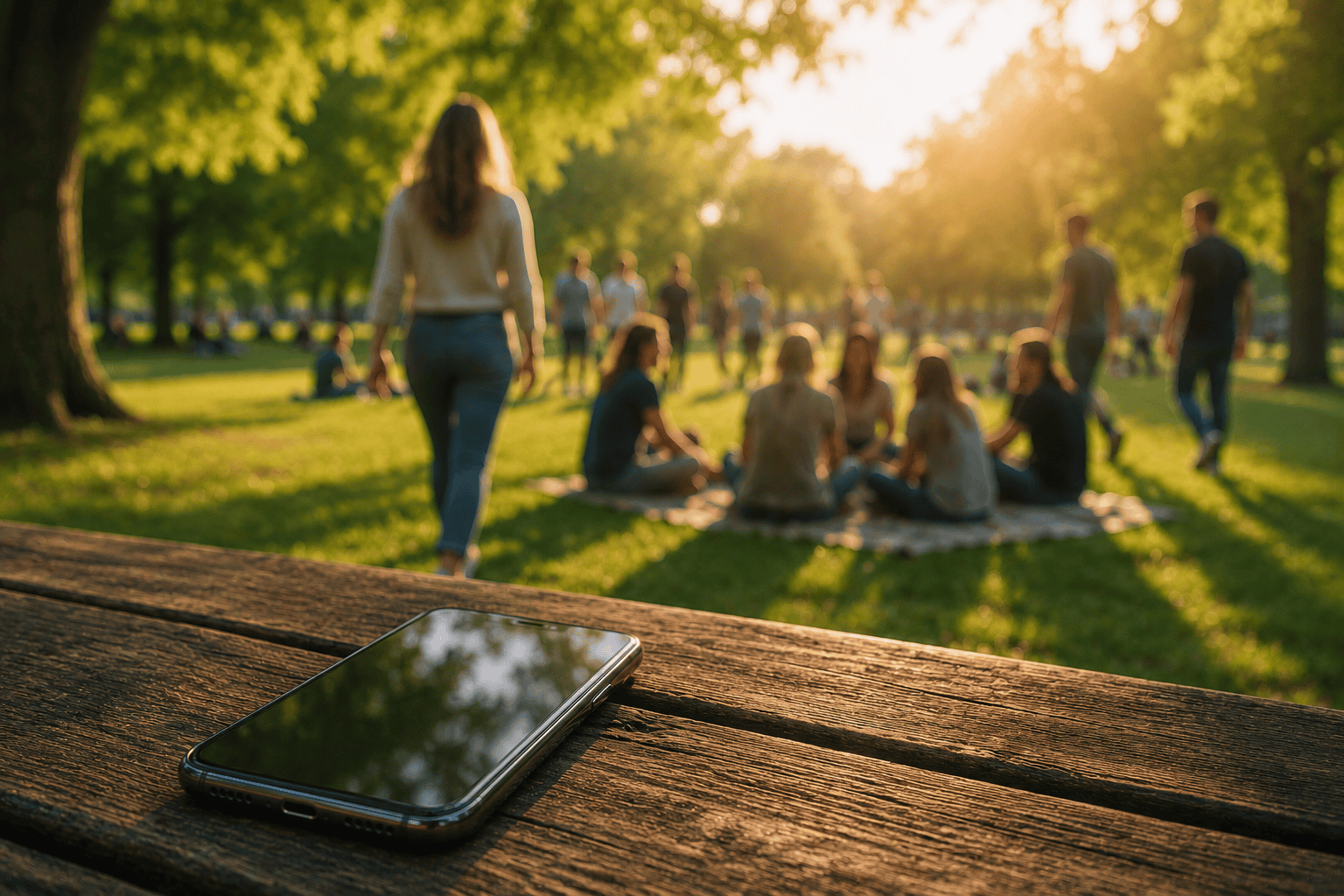
I Thought My Phone Was Just a Tool… Until I Noticed How I Felt Without It
Phone use and anxiety may not sound connected… until you notice how uncomfortable you feel when your phone is not nearby.
“I thought my phone was just a tool… until I noticed how I felt without it.”
Most of us keep our phones close by.
In our hand.
In our pocket.
Next to us on the sofa.
Beside the bed.
It has become so normal that we rarely stop and question it.
But sometimes, the way we use our phone can tell us something deeper about our anxiety, attention and emotional needs.
So before reading on, try this.
Quick Phone Check, Be Honest
No right or wrong answers. Just notice what comes up.
1. Where is your phone right now?
- □ In my hand
- □ In my pocket
- □ Next to me
- □ I had to check where it was
2. If you left home and realised your phone was missing, what’s your first feeling?
- □ No problem, I’d carry on
- □ Mildly annoyed
- □ I’d turn back for it
- □ Panic
3. How often do you check your phone without actually needing it?
- □ Rarely
- □ A few times a day
- □ Every hour
- □ I don’t even realise I’m doing it
4. What would you miss most if your phone disappeared for a day?
- □ Contacting people
- □ Maps and finding places
- □ Social media
- □ News and updates
- □ Music and entertainment
- □ Honestly… everything
5. £1 million, but no phone for one month. Could you do it?
- □ Easy
- □ I’d struggle, but yes
- □ Maybe
- □ No chance
And be honest… what would you panic about most?
When Phone Use Becomes More Than a Habit
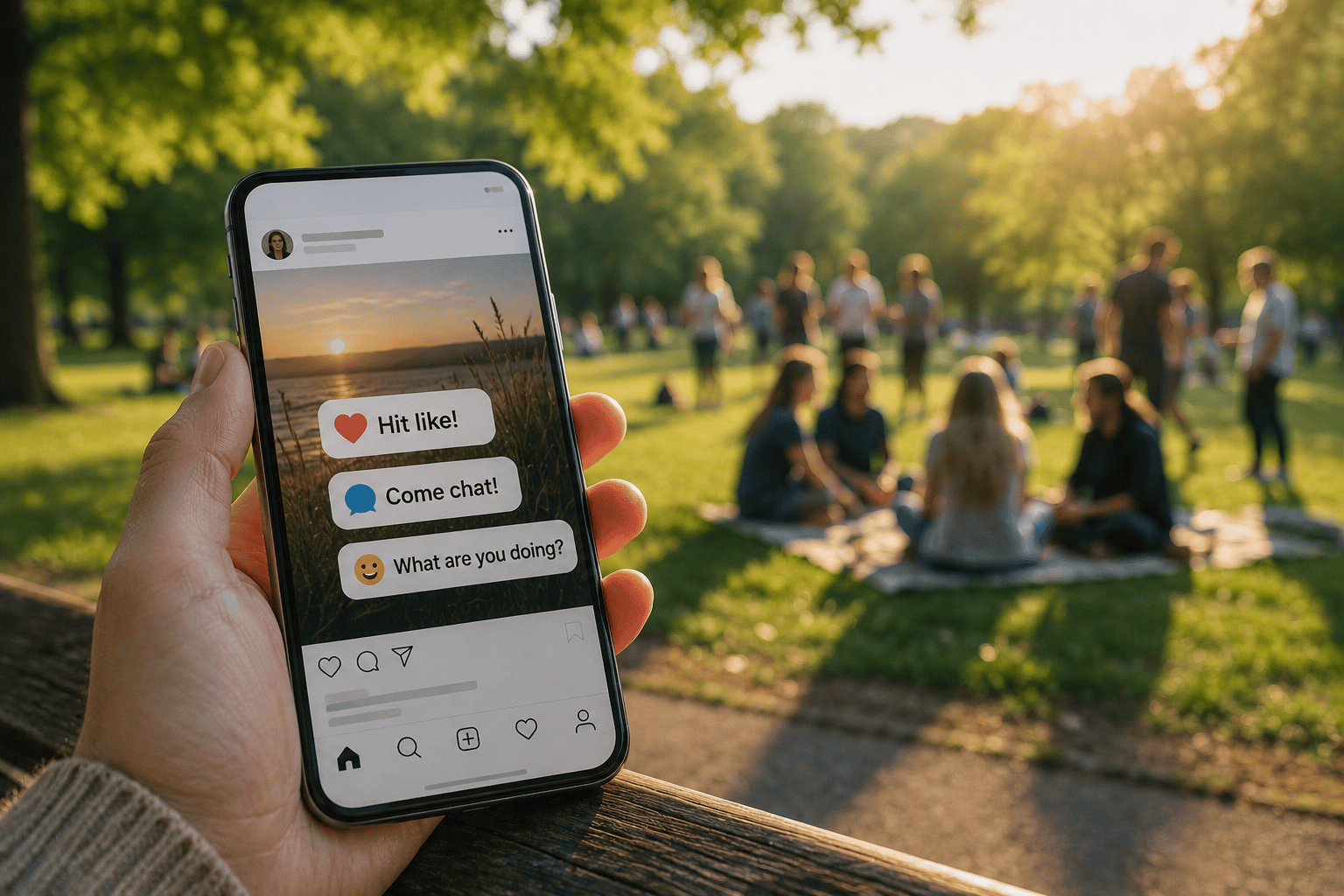
For many people, phone use and anxiety are more connected than they realise.
If some of those questions made you pause, good.
Because anxiety doesn’t always look like anxiety.
Sometimes it looks like needing your phone close by, just in case.
Even if you don’t have obvious physical signs of anxiety, your mobile can become a kind of security blanket. Something you reach for without thinking. Something that makes you feel connected, safe, distracted or prepared.
But what are you really getting from it?
Is it:
- Being able to speak to people?
- Searching for places to go?
- GPS for travel?
- Attention from social media?
- Gossip?
- News?
- Fitting in?
- Something to do when you feel bored or uncomfortable?
Most people no longer use a mobile just for phone calls and texts. The introduction of social media, apps and constant access to information changed how we use them.
Your phone is not just a phone anymore.
It can feel like a lifeline.
What Would Happen If You Lost Your Phone Today?
If you lost your phone, right now, what would happen?
Would you find another way to contact people?
Would you still be able to get where you needed to go?
Would you still enjoy your day?
Or would you feel helpless?
Many people have never really lived without a mobile phone. So the idea of being without one can bring up a surprising amount of discomfort.
And that discomfort matters.
Not because it means something is wrong with you, but because it gives you information.
It shows you where your attention goes.
It shows you what you rely on.
It shows you what feelings you might be avoiding.
Phone Use, Overwhelm and Anxiety
When we start exploring phone use and anxiety, the patterns are often hiding in plain sight.
Sometimes, having everything grabbing our attention all day creates more overwhelm than we realise.
Messages.
Notifications.
News.
Social media.
People wanting replies.
Things to check.
Things to compare.
Things to worry about.
It can feel normal because everyone is doing it.
But your nervous system may not experience it as normal.
It may experience it as noise.
And over time, that constant noise can build into stress, restlessness, tension and anxiety.
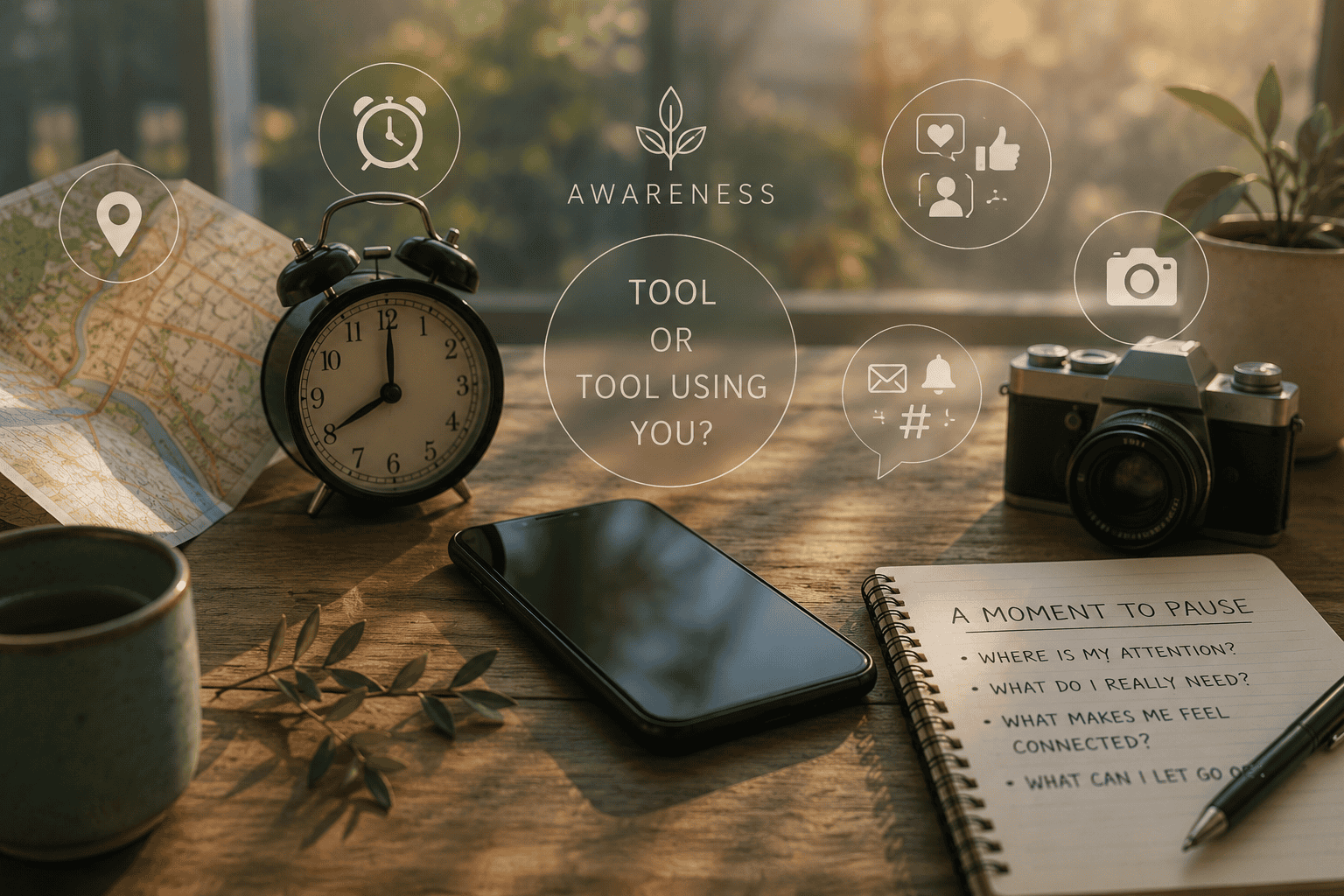
Is Your Phone a Tool You Use, or a Tool Using You?
This is not about blaming phones.
Phones are useful. They help us connect, travel, work, plan and stay informed.
But it is worth stopping for a moment and asking:
What is my relationship with my phone really like?
Do I choose when I use it?
Or do I reach for it automatically?
Does it help me feel calm?
Or does it keep my mind busy?
Do I use it as a tool?
Or is it a tool using me?
Sometimes the first step is not to change anything.
It is simply to notice.
A Gentle Next Step
Today, try putting your phone down for a short time and notice what happens.
Not as a challenge.
Not as a punishment.
Just as information.
Where do you feel it in your body?
What do you want to reach for?
What thought comes up first?
That small moment of awareness can tell you a lot.
Awareness is often the first step in changing patterns linked to phone use and anxiety.

A Note from Julie
When I first wrote this article, I wondered how people would respond to the idea of putting their phone down for a while.
Some people said they would enjoy the peace. Others admitted they would feel out of touch, and one person shared that, because they are disabled, their phone is an important part of everyday life.
That really reinforced something for me.
This article was never about saying phones are good or bad.
For many people they are an essential tool, helping them stay safe, independent and connected.
The more interesting question is whether that role still serves us.
As I’ve reflected on this over the past few weeks, I’ve found myself noticing my own habits too. How often do I reach for my phone simply because it’s there? How often do I choose to put it down?
Awareness doesn’t mean changing everything overnight.
Sometimes it simply begins by asking a different question.
What role does my phone play in my life today?
Perhaps that’s a question worth coming back to every now and then.
Would You Like Support With Phone Use and Anxiety?
If your phone use feels hard to control, or you notice anxiety when you try to step away from it, hypnotherapy may help you understand the patterns beneath the habit.
At Deeper Layers Clinical Hypnotherapy, sessions are tailored to you, helping you work with the subconscious patterns, feelings and automatic responses that may be keeping you stuck.
Anxiety can show up in many different ways, and organisations like Mind UK offer helpful information on recognising the signs.